

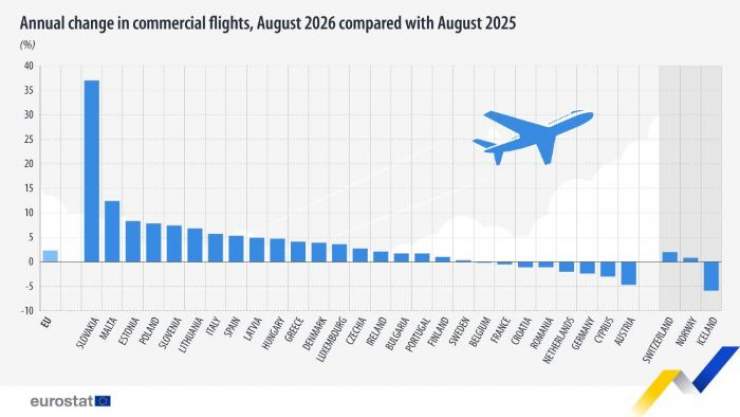
Eurostat has recently announced that between June and August 2026, there were more than two million commercial flights in the EU.
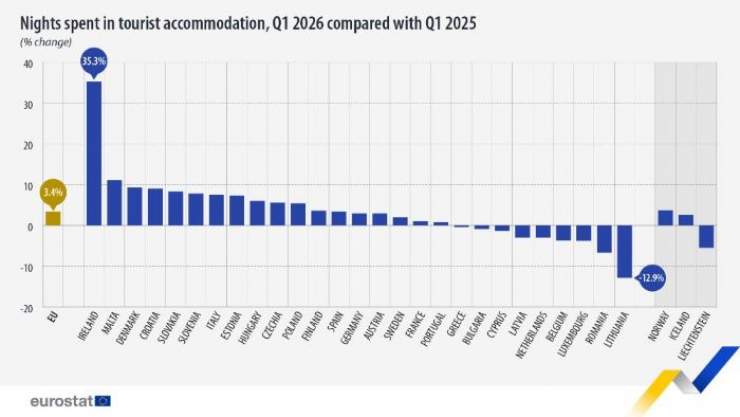
In the first quarter of 2026, there were 471.1 million overnight stays in tourist accommodations across the EU, marking an increase of 3.4 percent compared with the same quarter of 2025. January recorded 143.5 million nights (+3.2 percent compared with January 2025), February 154.4 million (+3.4 percent) and March 173.2 million (+3.7 percent).
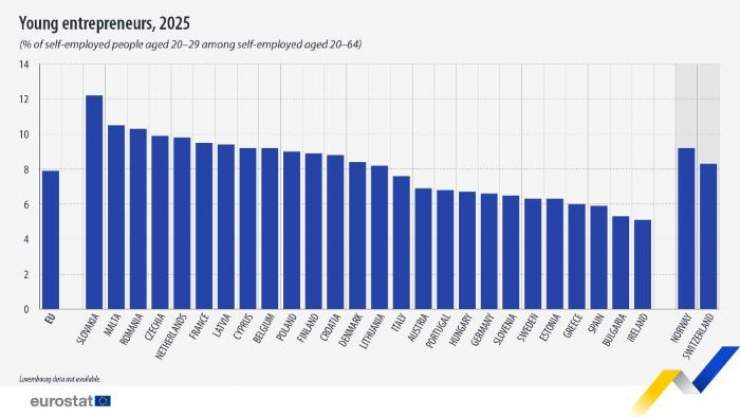
As technology reshapes workplaces at an unprecedented pace, some young people are finding their own ways to make a living, turning to self-employment out of creativity and innovation or necessity.
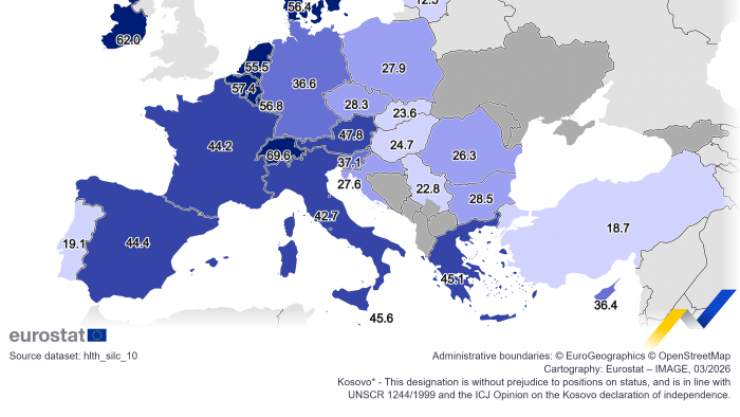
In 2024, more than two-thirds (68.5 percent) of the EU population perceived their health as very good or good. On the other hand, 8.5 percent of people rated their health as bad or very bad, with the remaining 23 percent rating their health as fair.
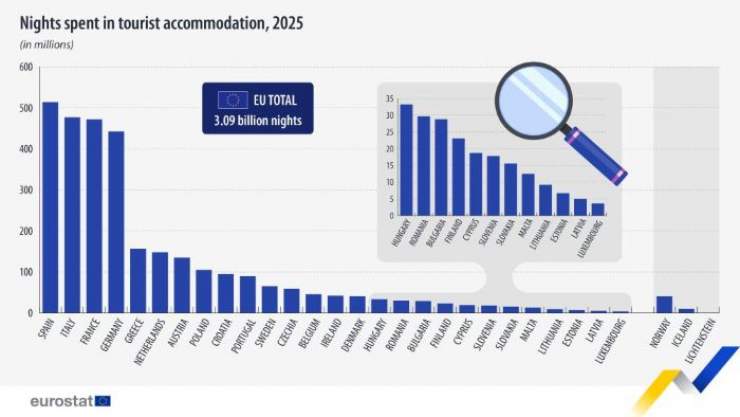
2025 was another record-setting year for EU tourism, with nearly 3.1 billion nights spent in tourist accommodation establishments across the EU. This reflects a 2.2 percent increase, or 66.4 million more nights than in 2024.
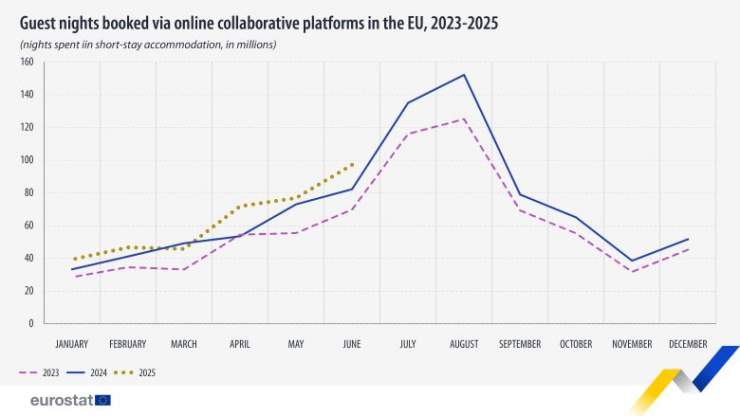
In the second quarter of this year, guests spent 245.9 million nights in short-term rental accommodation in the EU, booked via Airbnb, Booking or Expedia.
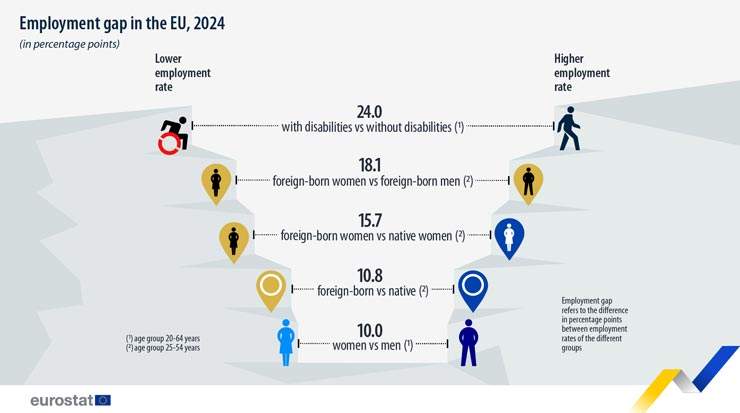
In 2024, employment inequalities linked to disability, gender and origin were recorded in the EU. The gender employment gap in the EU was 10.0 percentage points (pp), with an employment rate of 80.8% for men and 70.8 percent for women. The gap was 0.2 pp lower than in 2023 and 1.1 pp lower compared with 2014.

In 2021, 11.3 million people in the EU were employed in economic activities related to tourism (but not necessarily relying only on tourism).

In 2022, overall life satisfaction in the EU averaged 7.1, based on a scale from 0 (not satisfied at all) to 10 (fully satisfied). The score was slightly down compared with 7.3 in 2018 and consistent with 7.0 in 2013.